January 31, 2007
Random Links 134
Belligerent, Bullying Believers: Spite, not the Spirit
Maybe we should just call it what it is "bullying" - not the more religious sounding word "admonishing" - Prof. Stackhouse's words are worth some time here: "...not that everyone should pretend to be happy with each other. The point is not that we should avoid honest disagreement, even criticism. The point is the Golden Rule, and the apostolic injunction to “speak the truth in love“–sincerely seeking the good of the other person, not just seeking to get something off one’s chest." Read the whole post .. the specifics give the context of these words.
Reflections for a Conversation on Theology in Congregational Life
I confess that I find more energy reading stuff like this than church growth books right now.
Compiling a list of the Best Contemporary Works of Theology
Interesting list ... the results here The 15 Most Important Theological Works of the Last 25 Years is food for thought - fine food indeed :-).
The Delightful Terror of Reforming Theology
I admit. .. right now I'm still in my "Chim" mode (I'm finding it hard to translate that word - but it's something to do with dealing with "seemingly sophisticated maybe intellectual and not so down to earth stuff") But this is good stuff ... when you read words like: "Good theology should be both disturbing and comforting. " For more read Delightful Terror II
The Uncommon Lectionary
I love the revised common lectionary but this is equally worth checking out.
On Faith: A Conversation on Religion with Jon Meacham and Sally Quinn
wide variety on the panel.
Ok with all this "chim-ness" off my chest ... normal blogging shall resume? :-P Let me look for some cute pictures!
January 30, 2007
Friends 2007: Introducing Brian - the pastor [32]

Well, it's true ... Brian McLaren is not big in Malaysia :-) But for some of us he was the face of the what the emerging church/emergent conversation is all about. He was kind of the usher for many of us in order to face our doubts, honestly deal with our questions, and see an example of how one deals with his critics. In short, be a Christian as well as a Christian leader in today's world full of polarities.
My introduction of him was more as a pastor who wrote what I still think is a pretty good book considering the purposes it set out to do. The Church on the other side was my entry point (ok to be more precise it was the earlier book "Reinventing the Church" but seriously I prefer the revised version). Here's a sample pdf.
Here are some self-descriptive comments on himself and insightful statements in his preface and introduction which got me sitting up. One thing I learnt about reading Brian's books, his prefaces and introductions are very important to understand him properly. :-)
"This book really deals with the church as a love affair, a spiritual romance, a labor of love, a work of faith and art. It sees the church as a community that must be understood and befriended, not just a machine to be tinkered with and tuned up." (p. 7)
Every pastor needs to hear those words. So often being part of the church especially in leadership feels more like a burden rather than a blessing.
".. the church isn't ours; it's God's. ... it isn't ours; it's us." (p. 7)
This is so liberating ... and changes the whole way we can view "church".
"The question for us is how the church will emerge, take form, and develop in the postmodern matrix. And if I am right, this isn't just something we think or read about; this is something we can participate in." (p. 8)
After hearing more than one merely academic and intellectual discussion on ecclesiology, as a pastor we always ask "So, What's next?" or "what are some things we can do about it?". I can understand why many pastors or leaders find it easier to go for "how to fix the church" kind of conferences (I confess I've been to many too) because at least they can go away feeling they can do something about it. So, while mere pragmatism is always a danger lurking behind the scenes, I guess the initial desire is to want to participate in how the church can develop. It's easy to get lost along the way and get caught in the busyness of it all ... but it's never too late to stop, pause and reconsider where we are going.
"I am more interested in stretching your thinking here than tweaking your techniques, so what you learn here won't be easily boiled down into new tricks you can try this Sunday. In the same way, I must similarly advise all you thinkers and academics: I am a practitioner, not an academic (although I used to be a college teacher). As a "practicing pastor" I am rooted in the everyday and down-to-earth tasks of giving sermons, causing and resolving conflicts, answering phone calls and emails about who's singing what in the second service this Sunday, performing weddings and funerals, and that sort of thing. I guess you could say I am a reflective practitioner ... focused on the down-and-dirty of doing ministry, but trying to have a high-altitude understanding of when, where, how, and why we are doing it." (p. 8)
This I think was the first time I read the phrase "reflective practitioner" and thought to myself ... "Hey! I can be that .. and I want to!". It was interesting the other day when I shared with someone about the upcoming Friends 2007 event and Brian who's coming to speak (it's nice to be able to say I've got a friend whom I knew for the last 6 years who's coming). The person looked interested and then asked, "How big is his church?" My reply is "I don't know". And then we conversed further on what is the content of the event. For me, it didn't matter how big or "successful" Brian's church was even when I first read the book. What I was looking for was how can I be a faithful pastor leading a young congregation that got "resurrected" in the here and now! This particular book gave me some confidence to authentically work this process out without falling trap into the popular trends and forces which can easily demoralize one (if they define their self-worth by them).
For me, I believe the answer/s to the many rumblings and rants and frustrations to what many people are not Christians as well as unchurched Christians about the church isn't more explanations and excuses (which may or may not be helpful). And even though Biblical as well as theological expositions on the vision of the church are important but often may sound distant and makes us feel we'll never reach the ideals in our lifetime. What's crucial is (with all the theological, biblical and historical resources as well as openness, creativity and sensitivity to the Spirit working in and through community) ... There needs to be "alternatives" - community of Christ-followers, friends and family who are willing to "participate" in a kind of church which consciously guards against the idolatry of consumerism or traditionalism and humbly engages the context of our lives while reengaging with the Biblical story we find ourselves in :-) And pastors and church leaders play an important role in this process - whether it's being a hindrance or helpful along the way.
There are times when it's easy to slip into a kind of "Elijah-am-I-the-only-one" syndrome. But, in recent years there are grounds for me to be a little more hopeful. That's where I would like to put my energies in.
Phew! ... I feel better doing this post. Very therapeutic. Just before I turn softy and fuzzy ... I'll leave the quote Brian left behind on p. 16 in his introduction:
"In 1970, Francis Schaeffer saw the change coming:
The church today should be getting ready and talking about issues of tomorrow and not issues 20 and 30 years ago, because the church is going to be squeezed in a wringer. If we found it tough in these last few years, what are we going to do when we are faced with the real changes that are ahead? ...
One of the greatest injustices we do to our young people is to ask them to be conservative. Christianity is not conservative, but revolutionary. To be conservative today is to miss the whole point, for conservatism means standing in the flow of the status quo, and the status quo no longer belongs to us ...
If we want to be fair, we must teach the young to be revolutionaries, revolutionaries against the status quo."
Brian's comments made me think about the kind of church and Christianity I pray my children would see and grow into and something I want to participate in.
"I was in college when I first read those words. Now, over the threshold of the twenty-first century, with my own kids in college, Schaeffer's words about revolution feel even more poignant, more stirring. I want to give my children a faith intended for revolution, not status quo. And not just for my children. I want that for myself -- and for you."
January 29, 2007
Friends 2007: QRoH Notes [33]
The emergent Malaysia site has new articles up in our Articles Section. What we hope to put up is not just specifically emerging church & emergent conversation related material. But the broader concerns which has got us talking and thinking in the first place.
Here's some appetizers:
Hooked On The Numbers
"... A long time ago, in another life, I worked as a pastor. The highlight of my week then was finding out the worship attendance of the most recent worship service. If the numbers were up, I felt a certain joy, a hidden gladness, a secret pride of my church and my ministry.If the numbers were down, I would think up all sorts of reasons to explain why the numbers had dropped, for example, "it's the holiday season, and many of our folks are away." I felt apologetic when friends visited on Sunday and the numbers were down. I was hooked on the numbers."
A Spirituality For Activists
"... I am excited by this development. This is no manifestation of the old "social gospel." Many of the new generation of Christian activists were not yet born when the term was coined. Many of them come from churches committed to evangelism.
But there is a new generation emerging that intuitively recognizes that you can't separate evangelism from social concern. They realize that you can't just preach the truth. You must live it out as well, and live it out in every sphere of life."Understanding Spiritual Formation
"... There is often confusion when the terms spiritual formation and discipleship are used. Many people regard both terms as similar. On the superficial level, they are similar. Both are aspects of sanctification. Discipleship is the process of making disciples. Unfortunately, in the last two decades, discipleship has become a program. In some churches, if one has completed a certain number of courses, he or she is a disciple. Discipleship has a strong emphasis on head knowledge and behaviour modification. Spiritual formation is more holistic in that it aims at both head and heart knowledge with character formation by the Holy Spirit. It can be regarded as ‘discipleship plus’"
and of course a couple more related to Brian McLaren since he's the guest speaker.
A Generous Orthodoxy
"... I must say that Brian is very generous in his assessment of the state of the church and other Christians. I wish other and other were as generous towards him. Fortunately there are other.However, in terms of orthodoxy, I saw how he cleverly tred his way between theological landmines without setting them off. He also skirted the edges of Roman Catholicism and Eastern Orthodoxy without being pulled in. Though I do not agree with everything he wrote, I have enjoyed his explanations and tried to see things from his point of view."The Secret Message of Jesus
"...My understanding of the Kingdom of God is that it is the rule of God in our lives, starting now and extending into eternity, involving all spheres and dimensions of our lives as we follow our Lord and Saviour Jesus Christ.Basically, McLaren said the same thing. What surprised me is that from the way the book was written, it was assumed that other Christians who will be reading his book do not share the same understanding of the kingdom of God as I do. How do these other Christians understand the term, kingdom of God, I wonder? Would I have understood the kingdom of God differently if I am not who I described above. Would it be a secret message then?"
The Church on the Other Side
"...As a young pastor turned church planter ministering in these times of fast changing realities (whether we call it post modern transition or not), I am challenged by McLaren's book to reconsider many 'sacred cows' I've inherited in the course of my church life, seminary education, and interaction within the Malaysian Christian community in general. These 'sacred cows' include the search for the perfect church model/structure (usually with a "Big is better" mentality), or the particular evangelistic programme that will solve all our problems (usually copied wholesale), or some revival experience that will rev up the whole nation at one go (usually one mass event), or clinging on to a particular theology or tradition that is considered most faithful to God (most of the time without considering the differences in historical and cultural contexts).The list goes on! Certainly, there is much value in these things, and through them I have discovered helpful tools for ministry. My philosophy of ministry has also been expanded and my heart has been warmed by the passion behind these efforts.And yet I am concerned that in our desperation to make things happen in our churches, we are tempted to grasp at any available answer or to resort to 'fix it all' solutions. However, the real answer lies in having a proper understanding of the momentous changes that are happening in the world today. Only then will we be able to develop an effective response that integrates theology, mission and church ministry. In this regard, McLaren's book serves as an excellent resource for struggling pastors."
I got an email today which made me think again about the terms "emerging" and "emergent" ... for me I found it helpful to keep my usage of the language to "emerging churches" and "emergent conversation". It just makes it easier for me to navigate in my own mind how to work through the issues raised thus far.
I'm not sure how Ray Anderson's book An Emergent Theology for Emerging Churches is being received in USA or other countries. But his approach is to me useful to deepen how we do theology and ministry here in Malaysia. The main value is to keep theological reflection close to everyday church & ministry praxis. This is crucial in at least our discussion here in Malaysia where we get the debris of whatever is going on in the English speaking world. Some see "emerging churches" as some kind of anti-institutional and trendy kind of movement, others might hear the word "emergent" and have their heresy hairs standing up, often we are tempted to see this all things revolving around these two words "emerging" or "emergent" in "either/or", black and white, or "dangers to avoid"/"solutions to our problems" categories which to me misses the whole point of the conversations and innovations thus far.
Therefore, based on my consistent use of the term "emergent conversation" to connect my thinking more in terms of the theological (even philosophical) aspects of the way we work out what it means to be a Christian and Church today, while the term "emerging churches" is what all this looks like in concrete and communal form ... this distinction (not division) I think resonates with what Ray Anderson says in the following :
"This is why I argue that we must recover an emergent theology, not merely explore the edges of an emerging church in its attempt to make the message culturally relevant.Here is my case: An emergent theology is messianic. That is, it is a theology that is anointed and Spirit-led to point the way forward. An emergent theology is like the finger of John the Baptist, pointing into the world and saying, "Here is the lamb of God" (John 1:29). Emerging churches are missional. That is, these are churches that only exist as the continuing mission of Christ (the Messiah) in the world. Emerging churches are like Jesus arising out of the water of baptism, anointed by the Spirit, and moving into the streets and market place to heal, promote justice and seek peace.
An emergent theology is revelational. It is a theology of the Word; it is the bread come down from heaven; it speaks truth and opens minds and hearts. Emerging churches are reformational. They seek to put new wine into new wineskins; they want to renew the church that already exists and translate the older formulas of the faith into new paradigms of contemporary communication.
An emergent theology is Kingdom coming. It is a theology that proclaims a new order of God's reign already present as a transforming spiritual, social and economic power of liberation and rehabilitation of humankind. Emerging churches stress Kingdom living. They seek to be the gathering of all who seek the blessing of being 'grace-filled' believers and the empowering community that sends them forth as Spirit-filled disciples.
An emergent theology is eschatological. It has the mind of the risen and coming Christ as well as the heart and soul of the historical Jesus. It is a theology that keeps hope alive by preparing the way of the future into the present while, at the same time, keeping faith alive by "looking forward to the city that has foundations, whose architect and builder is God" (Hebrews 11:10). Emerging churches are incarnational. Their language is that of the people; their message is communicated through culture; their presence in the world is ordinary so as to get within arms length to embrace others with extraordinary love."
If that is what the "emergent conversation" and "emerging churches" is all about which I think it should be then -- three cheers and let's move on. if it's just about spinning in circles whether it's theological and philosophical arguments and dabbling in ministry innovations devoid of depth then I sure didn't sign up for that. So far, my limited experience as a quiet outsider has been more positive than negative while not blindly following whatever I see is blowing in the air (honestly I've been there and done that in a different "life" which is another story)
In the light of the above, then this Friends in Conversation 2007 event we are organizing is not so much of promoting a specific church model or branding ... the goal is to create space where we can collectively engage in a listening and learning process to see where we can go from where ever we are as Christians and as Church with a "proper confidence" in Christ towards the future. This is what I've signed myself up for.
January 28, 2007
Random Links 133
Are you an E-word?
Fascinating closing ... "Should you care to know, one thing the word “emerging” seeks to capture is the older sense of evangelical for a new day.
I’m a follower of Jesus — orthodox, catholic, protestant and therefore sometimes (but clearly not always) “evangelical.” Five terms, in that order, so help me God. "
Boundary Marker Spirituality: A Story
We need to hear the stories - both the painful and also the graceful!
WHAT KIND OF CHURCH?
I sent this to at least 2 Bishops, 1 seminary principal and a bunch of friends :-)
the starfish and the spider
I love the word "catalyst" ... and maybe I should get this book and think about it more.
creative leadership (pdf)
This looks like a great presentation .. I loved the marriage of text and image in it.
Apologetics as Dialogue
Interesting picture with the post.
imagination and god’s future
staring with a cool quote by Einstein, "Imagination is more important than knowledge." made me download his article!
Is the New Testament Reliable?
Just in case someone asked. I'm planning to listen to the whole NT at least 4 times this year!
January 27, 2007
Narada Classic: San Juan Suite I / San Juan Suite II
This sound trax is more helpful for this week :-)
emergent malaysia steps back

our little website re-emerges with much life and vitality thanks to wonder Bob.
We added in some new stuff in:
Articles
Creeds
Blogs
all of this is a very beta mode right now. But it's great to see the site growing healthily!
January 26, 2007
Friends 2007: QRoH Notes [36]
It's encouraging to see the registrations gradually coming in. I think the online registration form is helpful.
Reading the participants expectations are fascinating ... interesting how the word "emerging" crops up ... whether it's emerging trends or emerging church. Right from the start we wanted a broader focus and we still are heading there. But we also believe all must come as they are.
My entrance to the overall conversation was more through Brian McLaren's writings and interaction with Jason Clark years ago (until now). Of course, there's also a good dose of articles from Next-Wave Ezine.
And I've been consistent through the years (ok not that many blogging years *grin*) highlighting some of us have been talking and thinking about similar concerns with the "emergent" conversation and/or "emerging church" phenomena albeit in slightly different language for a pretty long time. I've heard echoes of this during my days in seminary, and also different readings here and there. What interests me at this stage as was then, is how all this can be fleshed out in a local church context, wider Christian community as well as globally.
At this stage, I'm still hesitant in using the term "emerging church" partly because unlike the early days, today it's easily boxed into either a kind of "brand" or "trend". And some amount of energy is needed to first unpack the term, and maybe redirect the focus to the concerns which originally inspired the term in the first place. But then again, that's the reality of our world where blogging is faster than publishing ... for good or ill.
As far as the "for good" part, I hope our little effort through this event will help those coming to go beyond the superficial discussions on theology, spirituality and ministry/mission to a more integrated conversation which plugs the church back into the God's agenda for the world.
I'll need to get ready to work out some details with the conversation facilitators and follow up on our Roman Catholic friends and see how is their participation. But before some energy can be put there on Monday, I'll need to focus on my own church council meeting tomorrow, preparations for our upcoming AGM, Sunday Worship and also the post-worship baptism and affirmation class (we're starting with the Creed which is cool), and also other family responsibilities.
There is no one full time organizing this event ... and everyone is chipping in as much as they can while juggling 101 other responsibilities. I'm so grateful for their partnership in this. Some already have been putting in extra efforts.
I've already picked out all of Brian's books I have .. and hopefully start my series "Brian McLaren: Introductions" series ... I chuckled when I got an email and the person asked "Who is Brian McLaren?". Now that brings the matter into perspective. :-) at least in our Malaysian context.
January 25, 2007
Random Links 132
THE 2006 WILLIAM BELDEN NOBLE LECTURES
I'm listening to the first lecture now ...
The Right Reverend N. T. Wright, Bishop of Durham, England
Introductions by The Reverend Professor Peter J. Gomes
October 23, 2006
"God the Creator: The Gospel in a Gnostic World" (mp3)
October 24, 2006
"Jesus the Lord: The Gospel and the New Imperialism" (mp3)
October 25, 2006
"Spirit of Truth: The Gospel in a Postmodern World" (mp3)
the best summary of Luther's De servo arbitrio
I saw the book but it's VERY expensive. The following is good for supper tonight:
"1) God is a person, the almighty creator of all that exists, the sovereign Lord and sole acting agent over his creation, totally responsible for all that takes place.
2) The Creator is by definition hidden from his creatures but has revealed himself in his incarnation as Jesus Christ and in Holy Scripture.
3) God has chosen from among fallen sinners people to be his own children and has restored them to their full humanity, that is, to trusting i him, through the work of Christ.
4) God acts in his Word, condemning sin through the law and conveying Christ's benefits to his chosen people through the gospel, in oral, written, and sacramental forms, called collectively the means of grace.
5) Human beings are creatures and thus totally dependent on God their Creator. 6) This dependence of the human creature on God can be explained and defended by a doctrine of absolute necessity, that is, that all things happen necessarily as God designs and decides.
7) Human beings are responsible for their own disposition and actions but are sinful, captive to Satan and their own desires, and thus totally dependent on God for liberation from their sinfulness.
8) Human beings are designed by God with active minds and wills that are to be dedicated to carrying out their callings in obedience to God.
9) Believers are engaged in a lifelong struggle against their own abiding sinfulness. Their lives are lives of repentance.
10) God is not responsible for evil. No explanation of the existence of evil and its continuation in the lives of believers in possible."
a confession
A confession which includes a wonderful prayer .(which I particularly like even thought my confession would be different) ...
"Dear God,
Your followers make me crazy. I'm totally a jerk about this and I'm sorry. It'd be great if maybe you could try and improve some of the theology on the ground here, and if that's not going to happen then help me to not be so arrogant. Be with those whom I find most irritating and show me how to love them. This is pretty much only going to happen by your grace, which in the past has done for me what I could never do for myself, so I'm trusting you again. Your will, not mine be done (we can all be thankful for that)
In Jesus' name,
AMEN"
Here's A Quick Way to Lower Your Stress
I hear about "stress" all the time ... and perhaps after listening to all the mp3s above and reading the confession and Luther's gems .. one needs to lower their stress too ... :-P
The Bible Experience - NT
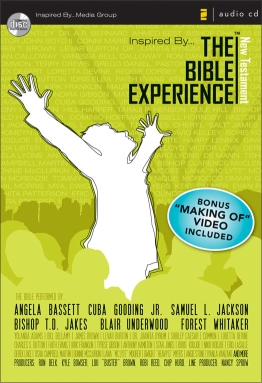
I stumbled on The 2disc Mp3 version at Glad Sounds Jaya SS14. I've always wanted to "listen" to the Bible ... and this version really raises the bar and sets the standard in terms of the quality of audio Bible reading.
I've just finished listening to the whole Gospel of Luke (started last night), continued in the afternoon, and heard the last chapter 15minutes ago.
Here's an interesting piece from International Herald tribune:
"... The 21-hour production, which lists for $49.99 (€39), features the voice talents of more than 250 singers, clergy and actors, including Denzel Washington, Cuba Gooding Jr., Angela Bassett and Alfre Woodard. Blair Underwood portrays Jesus, and Samuel L. Jackson, who played a Scripture-spouting hit man in "Pulp Fiction," is the voice of God.
... The producers decided early on to cast only black actors and other personalities, hoping to attract a black audience, as well as fans of some of the world's biggest box-office draws. They also wanted to shatter the Hollywood mold of white Bible productions.
"I was particularly interested in developing a product that might resonate with the African-American community," Bowser said. "I've long felt that Christian product tends to ignore our perspective."
He called it "a gift from our community to the world to be shared and appreciated by all.""
It's not a cheap gift but it's worth the price. After listening the Gospel of Luke, I'm ready for more!
Good Looking Baby: Slightly more solid Church

My friend Jason Clark in UK is one whom I'm listening too (and I miss the fun we had when we last met some years ago face to face, I still remember the prayer in the van before the train ride) ...
I read the following with much excitement and interest on his post Slightly More Solid Church
"I am going to blog my Ph.D research from inception to hopeful completion. I start my supervision this week, and hope to complete in summer of 2013. I wonder what twists and turns it will take
as I read, reflect, write, and (I hope) have your ongoing input and thoughts?
So putting them out here crudely like a new born baby that I hope you don’t think is too ugly, here are some thoughts in my journal this morning as I sketch out my initial focus.
1. Ecclesiological: I think my focus is leaning towards trying to articulate what ecclesiologies are appropriate for our post-modern/post-colonial/post-structural contexts in UK. I think I want to find a theological critique of culture and church with its implications for ecclesiological constructions. At it’s crudest a paraphrase might be I am trying to find something counter to many of the ‘liquid/fluid/post- church’ thesis.
2. Deep Church: I think there is something in the deep church agenda/conversation which is positive and constructive and would help me avoid a pathological reaction/construction to many current ecclesiological suggestions. The deep ecclesiology, generous orthodoxy as background to my work is going to be helpful, and facilitate something constructive I hope. Deep church is not about articulating the correct form of church but the valuing of church in is deepest and broadest sense, from the most established to the most nascent. I know I want to avoid a post-church response.
3. Culture as religious system: I think at the heart of this I am trying to establish that or culture acts as a religious system, and that we need a critique of that culture, and a form of church much more solid, than many are suggesting to allow mission and conversion to take place. Almost the recovery of the congregation not as accommodation to modernity, but as a life rhythm to mission and an alternative to the religious formations and practices of consumer media culture (and I do not mean that as apologetic for a sunday service!).
The church has been dispersed historically under persecution, yet now is encouraged to de-gather under consumer choice. Our culture is unconsciously able to consume our new forms of church co-opting them as pastiche aesthetical experiences, whilst avoiding conversion Christianity as a way of life. Indeed many new forms of church are in danger of facilitating the ongoing process of de-conversion. If the critique was that church was a dispenser of religious goods and services, is it continuing that trajectory even further with many forms of church? What would an alternative look like? I’ve been trying to get a general overview of post-modern philosophy, hermeneutics, and historical theology as preparation, and my brain hurts.
So how’s that baby looking? "
Friends 2007: QRoH Notes 37
Nice to see the event get some "airplay" at the following sites and blogs:
Seminari Theoloji Malaysia, Council of Churches of Malaysia, Sherman Kuek, Alex Tang and Bob Kee
I found Bob's entry good ... because first it highlights another worth while event the 4th National Congress On Integrity which is focused very much on our Malaysian social-political context. I think this is good because so often Christians and the public in general often are very passive in these matters and we reduce our involvement mainly through complaining (Lord have mercy).
Bob continues after that with some interesting comments on Brian McLaren and the Friends in Conversation 2007 event which we're organizing for the first time. And what's important to me .. is right from the start we wanted the focus to not be on the so called "emerging church" phenomena or perceived controversies surrounding Brian McLaren. Bob cheekily writes:
"The buzz is on this one. Noted and sometimes considered controversial speaker Brian McLaren will be in town engaging conversation partners from the Church in Malaysia in considering the challenges and opportunities facing the 21st century Church. McLaren is no stranger to controversy and while some love him, many others love to hate him (I can already think of a few I know personally LOL)
... I know some would balk at just hearing McLaren's name but I would suggest that even if you have reason to be critical or disagree with his teachings to come and hear him out and get the opportunity to actually challenge his supposed heresies direct from the floor."
I wonder whether people will be disappointed when they find our how ordinary and down to earth Brian is. And perhaps, what he's going to share isn't that "controversial" after all :-) We'll see ... what's important is I believe there will be places where we will be comforted .. and in other cases, challenged.
My personal hope from the start is that Brian's sharing and engagement with the conversation partners will serve as a catalyst for our own wrestling with the issues at hand - keeping in mind the Gospel, the role of the Church, our own discipleship as well as a keen eye on the world we live in. In many ways, the 2 events one initiated by OHMSI and the other by emergent Malaysia desire to encourage concerned followers of Jesus (or Christians) to connect their faith and witness with the realities we live in. The accents might be different but both seek to give a chance for individuals and groups to interact with each other for the good of our country (which includes the wider world).
The fun little extra Bob threw in was the Bonus Tip for Valentine's Day. As we talk about changing the world .. the mega issues, the public morality matters, the wider concerns, etc. I'm reminded ... of those who are immediately close to us. And for true change to happen, we cannot ignore our wives, our kids, our loved ones, our local congregations, etc.
*update: Bob added another event A Christian Response To The Marginalised which I got the info via email earlier. After seeing this, suddenly I felt Malaysia is blessed this year not just because of visit Malaysia 2007, but the fact that there are quality conversations and consultations on stuff that matter!*
Micah Network Asia-Pacific Consultation 2007
January 24, 2007
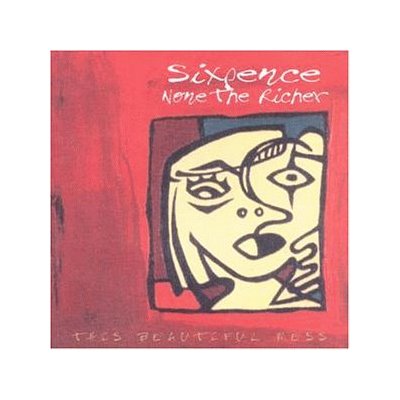
The Best Of Sixpence None The Richer
The first Album I got had a great title and fantastic artwork - This Beautiful Mess
emergent breakfast
somehow I think using a lower cap for the word "emergent" is doing me much good :-) And now I shall link away!
John Franke: Theology as Mission: Envisioning Christian Faith in a Pluralistic Culture
My experience is similar to Franke on this ... I was in touch and interacting with Mclaren in 2000 before the word "Emergent" has become a buzz for friend or critic today. During that time, I was also in touch with the Gospel in our culture network material and ideas which gave me some theoretical and theological "transitional" framework for me which freed me from a lot of the more popular & pragmatic driven ministry mindsets I drank (or choked) deeply from. Of course, there's more to the story I find myself in during these years of interaction with those who are willing to interact with me on the issues in which we converge in. :-)
"Franke was in emergent before it was "emergent." He has been friends with McLaren since 1988. Emergent is not perfect, but it is the conversation for our times, especially for the church in North America. Not that emergent ideas are all right, but they are that important. In 1998 there were mainline people who were concerned about the cultural transformation who started Gospel in our Culture network and started talking missional. At about the same time emergent, mostly people out of conservative evangelicalism, had similar concerns: formed Young Leaders network, terranova, and now Emergent Village. The conversations are coming together. Emergent Village defines emergent as “a generative friendship among missional Christians.” New things are always messy. There are no neat stories, including the protestant revolution. Plenty of good came out, but at the time it was very chaotic. It took time to sort out. We need to see emergent conversation in similar way. Also some things to be careful about, such as our commitment to scripture, doctrine of trinity, etc."
Scot McKnight: An Ecclesial Theory of Atonement
The last one month, the subject of "Penal Substitution" has arisen here and there in some conversations I had with others ... "Critics associate penal substitution with hellfire and brimstone, “little boy, your mom won’t be in heaven.” It locks us into a misleading rhetoric. Penal substitution makes all of atonement about God who is wrathful at sinners and pours out his wrath on the Son, and thereby releases his wrath so we don’t experience it. The atonement is more than that. To be sure wrath is involved. But it is more than expulsion and absorption of wrath within the trinity. Different ages have expressed atonement in different ways; we miss the wisdom of God’s spirit in history of the church by narrowing to one aspect."
Five Streams of the Emerging Church: Key elements of the most controversial and misunderstood movement in the church today.
This article has been making some waves in the blogging circle I'm in touch with ... for a more juicy and meaty original manuscript (pdf) grab a cup of coffee and slowly enjoy it.
Three links is enough for now.
January 23, 2007
Friends 2007: QRoH Notes 39
I thought it would be a good idea to have some running commentary on the behind the scenes happenings as far as the Friends in Conversation : A Quiet Revolution of Hope event is concerned. So I decided to use "Friends 2007: QRoH" for short. I also hope to give due credit and appreciation to all those who have helped in one way or another.
Things have been moving really fast since we got to know Brian McLaren could stopover in Malaysia. My mind goes back way in 2000 when we had a number email exchanges here and there and continued our "conversations" since then. It's pretty exciting to finally have the chance to meet face to face. What I value more is that through his visit, we could initiate some "space" to get those whom have been already talking about the issues that concern us together. When all the conversation partners said "Yes" on the phone to me that they are able to join us , I can't help but say "wow! Thanks be to God!"
The "Working Committee" has been great ...
The Three Muskeeter communications team has synergized beyond my imagination : Kevin Thomas did a fantastic job with the brochure and logo design. And it was wonderful to sit with Joel Limand be part of the process of "copywriting". I suddenly realizes how jargon-bound I am. Wonder Bob gradually has "morphed" the emergent Malaysia site to be more pleasant and useful. A special highlight for us is the online registration form on live now.
Laurie from Council of Churches of Malaysia has already been taking calls and receiving registrations. Siew Foong has gotten Brian's answers for "An Interview with Brian McLaren" and we're looking forward for it to appear in the National Evangelical Christian Fellowship Newsletter. We will also post it on our website (and this blog) too after they put it online.
Michael Foong is already working on our recording possibilities whether video or Mp3. so we await for good news. Food quotations are on the way with the help of Adeline Lim. Kia Meng is brianstorming the corporate worship segments. I hope to work on more details with the conversation partners and facilitators. Yew Khuen is keeping us on track!
There is NO fulltime staff running this event. All of us are chipping in as much as we can while pastoring our churches, slogging at work, feeding our babies, marking exam papers, sitting in meetings, trying to get some rest ... seeing what we can do for the flood relief in Johor, and many other concerns as well.
But we believe this is going to be a wonderful chance for a good thing to happen ... a quiet revolution of hope. Sure, it's going to be a lot of talking and listening. But prayerfully in the context of respectful and loving relationships, honesty and humor, and having the dance of orthopraxis, orthopathy and orthodoxy in mind. That in a new way (at least in our Malaysian context) Christians can participate in a healthy conversation involving reflective thinking, deep spirituality and missional praxis. This so needed in our activity driven culture and ministry.
A short pause before our next move.
Friendly QRoH Buttons
Thanks Bob again for extra labor of love. I will put one at the side :-) of this blog!


Random Links 132
UNDERSTANDING SPIRITUAL FORMATION
congrats to Alex Tang for getting published in The Ooze! Nice to see a fellow Malaysian having a chance to be heard!
10 Theses on Renewal
"The fundamental crisis of the church today is a crisis of the Word of God. The church must recover the full dynamic of the Word, not just as Scripture, but as God-in-communication, especially through the written Word of Scripture and supremely through the Incarnate Word, Jesus Christ. This is another way of saying the church must recover a consciousness of who God is." That's thesis number 1 ...
So, what on earth is the church?
I like the diagram!
An Upside-Down World : Distinguishing between home and mission field no longer makes sense.
This connected because I was trying to explain a more centred set view of Christianity to a friend today: "Christianity has never had a territorial center. Our center is the person of Christ, and wherever he is known, there is another potential center of faith and witness. So, as mission historian Andrew Walls has said, the emergence of genuine world Christianity and the ending of Western assumptions of heartland hegemony simply marks a return to normal Christianity, which looks much more like the New Testament than Christendom ever did."
January 22, 2007
Friendly QRoH Banners
Thanks Bob for your labor of love on these friendly banners at the emergent Malaysia website.


Deeper: The D:Finitive Worship Experience
The more contemplative selection.
January 21, 2007
Random Links 131
IS HE OR ISN’T HE? OBAMA'S EVANGELICAL QUESTION
Interesting to follow this from a distance. These words made me ponder deeper how we use labels (and the limits it brings) ... "It would have been easier for the senator-cum-president to answer, simply, "Yes," to the evangelical question.
But for Obama, as for many of us, faith is complicated, messy, a work in progress.
And, if we're honest about it, the standard labels just don't fit."
Shipshape spirituality (HT: Maggi Dawn)
I'm carrying this to bed with me tonight ... "How do we deal with our fear? How do we deal with other people’s anger - and our own? How do we connect at the deepest level with people but, at the same time, maintain the space which makes ministry possible?"
Faith and Doubt
My message title this coming sunday is "When in doubt ...", so these words are helpful -- > "Central to faith (as opposed to certainty) is relationship. When we face doubts because the odds are against us we “bank” on knowing God, on our relationship with God, and we trust God."
IS ALL DOUBT SIN?
Nice picture ... and John Fyre chips in!
The Ancient Evangelical Future Call Conference: A Few Reflections from a Participant, by David E. Fitch
Interesting question: "Is modernity mainly the problem of White Evangelicals? In that case could the AEF Call have spoken in a language that made sense to anyone else other than White Evangelicals? " I suppose that will have to include all those non-white Evangelicals who devour white Evangelical thinking (sometimes unthinkingly or with a sense of inferiority?). Hmm... food for my own thought.
Rex Miller's Favorite Quotations
Here's my favorites of his favorites :-)
• Gandhi: "We must become the change we wish to see."
• Henri Nouwen: "Hope focuses on the Giver not the gift."
• Rev. William Sloane Coffin: "Faith doesn't give certainty it gives you the ability to deal with uncertainty."
• Johnny Cash: "You can only get so far with rage, you need strategy."
January 20, 2007
Random Thoughts after LCMS SGM 2007

I'm exhausted. It's been a long day.
I'm thankful for being given the opportunity to serve as the chaplain for the Lutheran in Malaysia & Singapore (LCMS) Special General Meeting (SGM) today. It was an important meeting and I was in charge of the opening holy communion worship service and the closing service.
The day required much focus and "centering". There were always little bumps and distractions a long the way. But, it was important especially during the times when I'm preaching, sharing or leading in worship that I not get pre-occupied with myself and what's bothering me. God has been gracious to me and I think I more than survived.
I spoke from Nehemiah 8:1-10 in the morning. And then shared from 1 Corinthians 12:21-31 during the closing session. I felt it was important at the end to include our Orang Asli pastor reading from the Bahasa Malaysia Bible. So after he read, we listened to the reading in Mandarin and also English. All in all including the morning we heard 1 Corinthians 12:21-31 read 4 times today. Somehow I felt it was very important to hear that.
right now, I just need some space .... to park some of my more detailed pondering of todays proceedings, lessons, behaviours, "surprises", .. all aside.
It's over for now, but it's not finished yet.
I do feel a burden lifted right now .... I'm not too sure whether others can fully understand what was running through my head especially before today and even now.
All human systems are imperfect and we are flawed no matter what we say or do. And yet, this is the context we must operate in. So, while we may try our best to be fair, to listen, to deliberate even to debate ... and later still needing to decide and bear responsibility to those decisions, we might still bump into a wall here and there. But there's no other way ... how we need grace! how we need to willingness to acquire wisdom as time goes by ... how we need space to process things through ... how we need to "center" on what's more necessary than get distracted...
winner or losers. Is that the only way to view the realities before us? I hope not ... I think not ...
running away and hide in a small cave on my own ... (unless there's wireless?!)
just sticking around people who are just like me ... and avoiding those who might be strange ... or even dangerous ... (reminds me of a movie .. "the Village") ... Not too sure that will work.
Sitting here to complain and look down on those whom remind me of my past ... nope doesn't sound right.
Using God's name lightly ... hmmm ... I think it takes more courage to tell someone they are misusing God's name .. and yet, like it or not it's open for debate. But generally, fear might cloud our discernment.
Hard decisions must be made. Toughness is needed for implementation.
it's 11PM ... hope to resume some normal blogging soon.
and also get on with the preparations for Friends in Conversation 2007.
January 19, 2007
Random Links 130
The real 'new atheism'
Pete Rollins helped me see Anselm in a new light.
How To Change for the Better!
At times reading some "How To's" are good.
Growing worldwide teen boom could fuel a dangerous generation gap (HT: Marko)
Loving the Hell Out of People & The Gates of Hell
I used this phrase before "Hell on earth" ... and I could see the eyes of my conversation partner light up.
The Missional Leader and Missional Church
A fellow Malaysian checking out the "missional buzz"
January 18, 2007
Matt Redman - The Heart of Worship
I remember when this song was making it's rounds in our local churches, Christian fellowships and conferences, it almost lost it's meaning and "punch." Not sure whether it's still popular now. For me, it's still one of my favorites. Good simple prayerful lyrics and singable tune. A good song to keep me in check during this Chinese New year season :-)
January 17, 2007
Christ & Christians
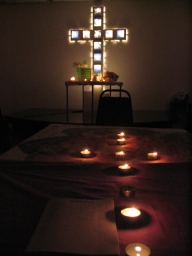
"Christ beside me, Christ before me, Christ behind me, Christ within me, Christ beneath me, Christ above me."
- Saint Patrick -
"There would be no need for sermons, if our lives were shining; there would be no need for words, if we bore witness with our deeds. There would be no pagans, if we were true Christians."
- St. John Chrysostom -
In the light of much that is happening around me and in our country ... and also listening to stories and identifying with the pain and frustrations which cannot be denied ... I needed to hear the above two quotes tonight (i.e. a prayer and a challenge) ... I'd also adapt the Christ before me prayer to Christ before ________ (fill on the blanks of someone's name, and/or others who are in desperate need )
[thanks Sherman]
January 16, 2007
Random Thoughts before I sleep
I'm pretty tired overall ... the last week has been full of adventure, many Hi's and Low's and unexpected events. Some energizing , others worrying, all in all I survived.
I'm amazed how there are people that can easily blurt out unsubstantiated opinions and declare them as facts. Lord have mercy.
Why is it that we can't be "free" and "open" with each other? The reality is that context rules in situations like these. The ideal is everyone is loving and accepting. But sadly this is not often the case and we feel like we are walking on glass.
I'm so thankful for friends ... friends who come and support plus give 101% on especially the upcoming event with Brian McLaren. I'm recalling with much fun my experience learning from an award winning copy writer ... the brief discussions on the phone talking about the values we want to display for the brochure and being delightfully surprised by the designs .. it felt wonderful when almost the invited conversation partners and facilitators said "Yes! Yes ! Yes!". It's heartwarming when you can pick up a phone and call a friends and say ... "Could you help? or do you know anyone who can?" and what you get is a warm reception (not a cold shoulder) and better still ways forward!
Friends ... :-) changgih!
sad ... happy ... relieved .. tired ... glad ... blur ... calm ...
focus .. discernment ... discipline ... persuasion ... appeal ... freedom
Be still ...
there's a lot of anger and frustration in the air ... there's a lot of lostness partly because we insist on our own ways ... many have low self-awareness partly because we are already too driven ... others don't ask the right people and rework our questions ... it takes quite a different way of thinking and a unique attitude to not get stuck in a rut (or in the mud)
need some pause ...
desire time to journal ...
I enjoyed reading the "Big Ten" (10 commandments) again . and again and again .. not to memorize but to go deeper.
I walked through the Lord's prayer again .. and shared them with group of students at university. I saw some tears of genuine heart cry ... I felt the move of the Spirit...
It's not about having positive thinking ... it's about hope
it's not about presumption ... it's about faith ...
it's not about being soft .. it's about love.
Good nite
January 14, 2007
Matt Redman - The Father's Song
The past 7 years have taken me into a journey of appreciating ancient songs as well as more Asian/African/Latin American Global songs. There was a season when I could hardly swallow contemporary stuff ... especially the "Top of the Pops" kind of tsunami of songs which seems to me unable to connect to the deepest yearning inside me.
There were exceptions ... especially some from Vineyard Music, Soul survivor and Passion.
This particular song is still one of my favorites - it does something to me - or more precisely, I find myself brought to a place where God the Father is working in me. :-)
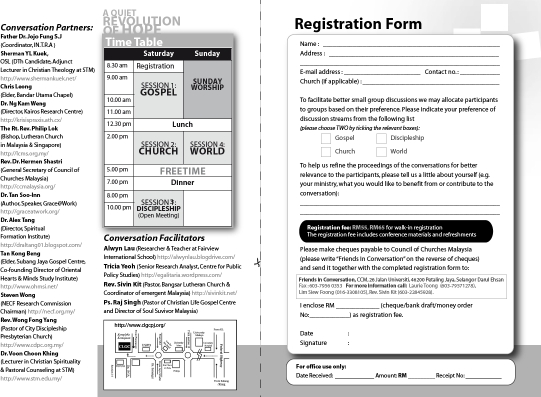
Friends in Conversation 2007 (with Brian McLaren)

Click Below for
Brochure Cover
Click Below for
Brochure Inside & Registration form
Click Below for
Brochure in pdf Format
Friends in Conversation:
A QUIET REVOLUTION OF HOPE

For the first time in Malaysia, influential speaker and author Brian McLaren and Conversation Partners touch on challenges and opportunities facing the 21st Century Church. Join the conversations on:
Gospel - more than we imagined it to be
Church - ways forward beyond forms and technique
Discipleship - tired of shortcuts and superficiality
World - being ready for active engagement
Date & Time: March 3-4 (Saturday & Sunday)
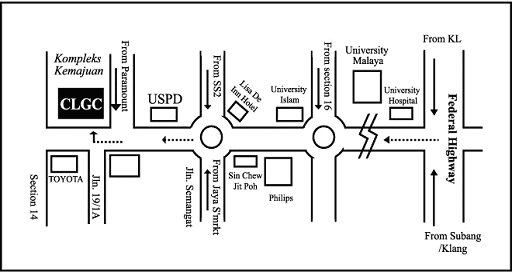
Venue: Christian Life Gospel Centre, Petaling Jaya
3rd Floor, Kompleks Kemajuan,
2, Jalan 19/1B, 46300 Petaling Jaya,
Selangor, Malaysia.
Cost: RM55 (Walk-in Registration RM65) - inclusive of handouts, tea and one lunch.
Organised by emergent Malaysia in collaboration with:
* Council of Churches Malaysia (CCM) Faith & Order Committee
* Initiative for Theological Reflection in Asia (IN.T.R.A)
* Seminari Theoloji Malaysia (STM)
* Glad Sounds Sdn Bhd
Conversation Partners:
* Father Dr. Jojo Fung S.J (Coordinator, IN.T.R.A )
* Sherman YL Kuek, OSL (DTh Candidate, Adjunct Lecturer in Christian Theology at STM)
* Chris Leong (Elder, Bandar Utama Chapel)
* Dr. Ng Kam Weng (Director, Kairos Research Centre)
* The Rt. Rev. Philip Lok (Bishop, Lutheran Church in Malaysia & Singapore)
* Rev. Dr. Hermen Shastri (General Secretary of Council of Churches Malaysia)
* Dr. Tan Soo-Inn (Author, Speaker, Grace@Work)
* Dr. Alex Tang (Director, Spiritual Formation Institute)
* Tan Kong Beng (Elder, Subang Jaya Gospel Centre, Co-founding Director of Oriental Hearts & Minds Study Institute)
* Steven Wong (NECF Research Commission Chairman)
* Rev. Wong Fong Yang (Pastor of City Discipleship Presbyterian Church)
* Dr. Voon Choon Khing (Lecturer in Christian Spirituality & Pastoral Counseling at STM)
Conversation Facilitators
Rev. Sivin Kit (Pastor, Bangsar Lutheran Church & Coordinator of emergent Malaysia)
Pastor Raj Singh (Pastor, Christian Life Gospel Centre & Director, Soul Survivor Malaysia)
Alwyn Lau (Researcher & Teacher at Fairview International School)
Tricia Yeoh (Senior Research Analyst, Centre of Public Policy Studies)
About emergent Malaysia
emergent Malaysia is a group of friends and followers of Jesus who are committed to one another and to creating space for conversations in Malaysia and beyond. We regularly meet to converse on topics regarding gospel, theology, church, discipleship, and engagement with our world.
January 11, 2007
PAUSE - PAIN - PRAYER - PONDER
for others ... Lord have mercy
January 08, 2007
Random Links 129
Meditating as a Christian: Waiting Upon God
I need to do this more .... I'm reminded from this section on "Light from Martin Luther" on how he tweaked the Lectio Divina that I could relate to:
"In a little essay entitled “A right way to study theology” he proposed three rules – oratio, meditatio, and tentatio – which he claimed to find set forth in Psalm 119 ( in Preface to Vol. 1. of the Wittenberg edition of his Works of 1539: in W.A. vol. 50, pp. 658–661.) Working from his strongly held view that the contents of Holy Scripture (which teach the doctrine of eternal life) make foolishness of the wisdom of all other books he urged the pastor or student to act in this way: "Kneel down in your study and pray to God in true humility and earnestness, that through his dear Son he may grant you his Holy Spirit to enlighten, guide and give you understanding". This is oratio – prayer.
The next step is meditatio and he advised as follows: "You should meditate not only in your heart but also outwardly, repeating and comparing the actual, literal words in the book, reading and re-reading them with careful attention and thought as to what the Holy Spirit means by them". Further he cautioned the meditator: "Guard against being satiated or thinking that when you have read, heard, or said it once you have understood it fully – for this will never make an excellent theologian".
The final – and perhaps surprising step to modern ears – is tentatio, trial. Luther believed passionately that the true theologian would confront the devil in his ways and works and be severely tempted by him. The trial, or the proving, of faith was Luther claimed "the touchstone that teaches you not only to know and understand but also to experience how right, how sweet, how lovely, how mighty, how comforting is God’s Word, the wisdom above all wisdom".
There is usually more than a glimmer of truth in everything Luther wrote and here he surely has put his finger on something quite important. A theologian, to be genuinely Christian, must be a person who prays, who meditates, and who seeks to fight with and for Christ against the world, the flesh and the devil!"
Mere Mission: N.T. Wright talks about how to present the gospel in a postmodern world
This is good ... for our conversations on "Gospel": " ... the great emphasis in the New Testament is that the gospel is not how to escape the world; the gospel is that the crucified and risen Jesus is the Lord of the world. And that his death and Resurrection transform the world, and that transformation can happen to you. You, in turn, can be part of the transforming work. That draws together what we traditionally called evangelism, bringing people to the point where they come to know God in Christ for themselves, with working for God's kingdom on earth as it is in heaven."
Rock Music & the Brain
Fascinating ...
How Does Saddam's Execution Make You Feel?
Before this question was posed, I didn't seriously think about it.
Waiting for Our No to Become Yes
I'm relearning the following afresh ... while being a little scared ..
"... Calls often seem immoderate, beyond our abilities or our wildest dreams, beyond what we believe possible, and immoderation is contrary to most spiritual wisdom. We balk, but it makes perfect sense that we should be called to go beyond our limits, because the One that calls us is beyond all limits.
... "If it feels safe, it’s probably not the right path," Mark Gerzon says in Coming Into Our Own, “but if it scares you, it probably is." The degree of resistance, too, is probably proportionate to the amount of power waiting to be unleashed and the satisfaction to be experienced once the "no" breaks through to "yes" and the call is followed."
The New Imperialists?
An Asian American perspective and questions worth a listen:
"What happens when Asians begin to exploit other countries and become the new imperialists?
How does that sit with us, as Asians who come with long histories of oppression and subjugation, yet now tempted with opulence; as Americans who consume ravenously and only seem to grow in our own navel-gazing; and most importantly as Christians who have remained safety-centric, economically unconscious, and for the most part nostalgic about our influence in the culture.
As an Asian American Christian, how do you feel today if it’s true that Asians are the new imperialists? What would you do differently?"
Defining Postcolonialism
Interesting attempt:
"Colonialism: a system of racialized and/or gendered constructs that maintain various forms of control over another national or ethnic entity.
Neo-colonialism: a tragic trend resulting from the impact of global capitalism whereby new forms of control and domination supplant displaced political hegemonies, preponderantly by means of economic leverage.
Postcolonialism: an intentional, self-critical, other-sensitive modus operandi of pressing those in power beyond the unconscious or deliberate tendencies toward economic, political, cultural and religious hegemony."
More Snow, More Globalizing Theology
Much to chew on ... wonder how this looks from when it comes to those of us who are pastors in the global south (how is it similar or dissimilar compared to the scholars mentioned here:
""It is clear that Christan scholarship and theology are not yet endeavors in which scholars and theologians from Africa, Asia, Latin America, and the Pacific Islands participate fully. The theological scholarship from these new centers of Christianity still needs to make its mark in a substantial way. As Frans Wijsen writes 'Often European theologians eagerly take up contextual theologies from Africa, Asia and Latin America, but they do not change their Western outlook and view of theology. They treat third world theologies as if they are exotic fruit to supplement their traditional European dishes.' As long as this situation remains, there will not be full participation by the producers of these 'exotic' theological creations."
"The full participation of theologians and scholars from the new centers of the Christian faith presents a number of challenges (which Tienou later unpacks). It may be useful, therefore, to review some of these challenges by asking the question, Why, to use (Andrew) Walls words, is 'the rule of the palefaces untroubled' in Christian theology and scholarship? In my mind, 'the rule of the palefaces' continues because of the paradox observed by Kenyan theologian John Mbiti: 'The Church has become kerygmatically universal, but is still theologically provincial'. Perhaps this paradox helps explain why relatively few people realize that the change in Christianity's center of gravity (global North to global South) 'has not only statistical but theological implications as well (Frostin)'. One may indeed acknowledge that the theological implications of this reality should lead to the development of Christian theologies from Africa, Asia, and Latin America. Nevertheless, the theologies of the Western 'province' of the church continue their dominance, even if today 'Western theological leadership of a predominantly non-western church is an incongruity' (Walls). "
Posted by sivinkit at 11:44 PM | Comments (0)
Random Thoughts before picking Gareth up from Kindergarten
The work, interaction, discussions, invitations, responses etc going into what is 90% going to be titled "A Quiet Revolution of Hope: Conversations on Gospel, Church, Discipleship, and World with Brian McLaren & Malaysian Conversation Partners" in March 3 -4, 2007 Saturday and Sunday has been exciting and rewarding, full of little twists and turns, interesting insights and surprises.
We had a difficult morning today, Gareth and I .. before going to school. I hope when I pick him up ... we can process through it again.
I hope to get re-energized as much as I can today. As tonight, I will need some energy to work with copywriter Joel on the QROH event above and maybe Kevin our designer extraordinaire can pop by too... we'll see. Tomorrow is a full day of meetings, and then I'm also hoping to tidy up the denominational education ministry stuff, and of course, there's the importance of local church BLC ministries and concerns (oh yes! some maintenance checks!)
Must get the books in my study sorted out ASAP so I can get my feet into my part-time master's program.
When was the last time I went for a proper swim? *hint hint* (to myself)
Teaching the children at BLC's "sunday school" on Baptism got me thinking about the "language" I use and the assumptions I had. One of the fun comments I heard was "Jesus is a ghost!", I asked "why?", ".. because we cannot see him!" ... "Oh!" Now that's a teachable moment for the storyteller in the group - me!
Got to go in 2 minutes ... drive all the way to Ampang and then all the way back and then all the way to Ampang again and all the way back ... and then ... :-)
I love it when the kids smile ...and show their teeth.. it's a lot of fun for all of us.
and May Chin has given them a decent haircut too ..


Superman (It's Not Easy)
Thanks Joshua Johnson for this link. It;s a good break from the more serious stuff I'm blogging about thus far.
A breather .. :-)
January 07, 2007
God of Joy

Psalm 68:3 <--> Philippians 4:4
"God of Joy, we ask you to melt the clouds of sin and sadness and drive any darkness of doubt away from our hearts. Let us see the beauty of the world through your eyes and experience the joy that comes when our souls are touched by your spirit. Amen"
- Moravian Daily Texts 2007, January 7

January 06, 2007
emergent Malaysia Open meeting January 13, Saturday

Date: January 13, Saturday Next week
Time: 2pm - 4pm
Venue: The Father's House (BLC premises)
Hi there, thanks for being patient with us.
first things first. Since we'll be having a good chance to have some "conversations" with Brian McLaren in person ... face to face in March 3-4 for the tentatively named "Quiet Revolution of Hope" Event (and for some even March 5th for the lectures in STM). We thought it would be a good idea for us to familiarize with some of his ideas and perhaps see where it does connect or doesn't connect with our context.
So this upcoming open meeting will be a time for us to share our reviews and reflections on his books as a spring board to orientate our thinking. We pray and hope we can have the information and brochures ready for the January 13 open meeting. If you'd like to volunteer to "review and reflect" on one particular book. Just email back and let us know.
The main agenda is conversation on the ideas generated from the books and reactions to them. A secondary one would be if there are friends who are interested to talk about the "emerging church" article in Kairos Magazine/Monograph and any further questions on "emergent" related issues (I'd be happy to respond to it as well as those who helped write the piece!).
January 04, 2007
The Great Cure for All Human Ills

"Whenever you are fed up with life, start writing: ink is the great cure for all human ills, as I have found out long ago." - C.S. Lewis (HT: brianleport)
I use the notebook keyboard more than ink, now I'm wondering whether I'm often fed up with life :-) Some wine in moderation might help with sleeping (for those where wine is permissible). One thing is for sure, every time I finish a blog post or complete another page on my "personal journal" (which does use ink!) I feel more ready to move on and move forward.
January 02, 2007
Footnote to All Prayers

[This picture was taken when I was at the peak of Zugspitze, Germany, what an awesome view which humbles one's view of ourselves]
I heard this poem quoted by Brian McLaren in his talk entitled "Ministry in a Postmodern Context Part 1" on Allelon Radio's Podcasts.
"He whom I bow to only knows to whom I bow
When I attempt the ineffable Name, murmuring Thou,
And dream of Pheidian fancies and embrace in heart
Symbols (I know) which cannot be the thing Thou art.
Thus always, taken at their word, all prayers blaspheme
Worshipping with frail images a folk-lore dream,
And all men in their praying, self-deceived, address
The coinage of their own unquiet thoughts, unless
Thou in magnetic mercy to Thyself divert
Our arrows, aimed unskilfully, beyond desert;
And all men are idolators, crying unheard
To a deaf idol, if Thou take them at their word.Take not, O Lord, our literal sense. Lord, in thy great
Unbroken speech our limping metaphor translate."
- Footnote to All Prayers, C.S.Lewis
Random Links 128 (1st for 2007)
Martin Marty on diversity in the ancient church
Noteworthy observation: "...it struck me that this is the difference between the systematic theologian and the church historian. The theologian wants to press for precision and the way it (perhaps) ought to be. The historian accounts for what actually was and is." Other bonus links included at the end.
The interdependence of the global church
Another good one by Al Hsu. "One practical challenge that Muriu offered – when American churches send a missionary to the Two-Thirds World, they should also work to receive a missionary from the Two-Thirds World. When churches send a team on a short-term trip, they should likewise receive a team from their partnering church or mission. The North American church must realize how much it needs the life and perspectives of our brothers and sisters around the globe to help us live missionally in our own culture. After all, every part of a human body both gives and receives from others. We are impoverished if we think we have nothing to receive from the majority world church."
The Top 10 Posts of 2006 (Leadership Blog)
I was thinking just because we have a "Top 10 Post" maybe because it has generated a lot of interest or is popular or noteworthy, it doesn't mean these are the Top 10 Agendas we have to to focus on. Having said that it does give us a pulse on what has evoked much response as far as the leadership blog readers are concerned.
So, what on earth is the church?
This was a good post to re-orientate my thinking ... "For many of us, church has been something we have lived with and around for much of our lives. And this is a good thing, because the community of faith is meant to be a living community of God’s people. But the problem is that hanging around it for so long we get to assume that we actually know what it is–what exactly makes it the church. Having been in it for such a long time actually makes it increasingly hard to ’see’ and therefore define. Kinda like a fish trying to describe the water it swims in. But getting to grips with missionality and missional church requires that we first get to grips with what the ecclesia really is."
What Is The Right Question?
So if you are job-hunting, what questions do you ask?
Six Propositions on What Makes Good (Christian) Theology (HT: Chris Tilling)
"1. Good theology is a transformative, embodied proclamation.
2. Good theology is a communal activity.
3. Good theology is contextual.
4. Good theology is biblical.
5. Good theology is historical and ecumenical.
6. Good theology is trinitarian."
Is China colonizing Africa?
Now, this is one question that shakes me up.
Year-ending, Year-beginning Reflections
It's not too late to begin working through these questions:
"How did the year begin? What were the events of last winter? Spring? Summer? Fall?
What took place in your home relations? Your work relations? Your church relations? What events in the larger community of city, country and world most captured your attention?
Who were the significant people in your life? What books and art instructed your mind and heart?
Did you create anything this year? Did you make any new discoveries about yourself? How were you gift last year to a person, a community or an institution?
What was your greatest joy in this year gone? What was your greatest sorrow? What caused you the most disappointment? What caused you the most sadness?
In what areas of your life did you grow? Were these areas related to your joy or your pain?
What are your regrets? How would you do things differently, if you could live the year again? What did you learn?
Did you have a recurring dream? What theme or themes ran through your year?
Did you grow in your capacity to be a person in community - to bear your own burdens, to let others bear theirs? Did you have sufficient time apart with yourself?
Did you root your life more firmly in Scripture? Did you grow in your understanding of yourself? What was your most important insight? Did God seem near or far off?
How do you want to create the new year? What kind of commitment do you want to make to yourself? Your community? To the oppressed people of the world? How do the questions about commitment make you feel? Angry? Challenged? Hopeful?
Who are the people with whom you would like to deepen your relationships in the year to come? Do you have relationships that need to be healed? What can you do to heal your own heart? What can others do to assist in your healing? In Scripture it is written, “Ask and you shall receive.” How can you ask God for what you need? How can you ask God’s people for what you need?
Is there a special piece of inward work that you would like to accomplish? Is there a special outward work? What are the goals that seem important to you? What are your hopes? What are your fears? What are the immediate first steps that you can take toward the goals that seem important to you?"
January 01, 2007
Random Thoughts on New Year's Day

Woke up ... some good coffee ... started the day with the Moravian Daily Texts.
Finally posted up "the Emerging Church" article .. but realized some of the fonts wasn't compatible and the piece was peppered with "question" marks :-)
Tried to take care of the 2 kids while May Chin went out of the house for a while.
A delightful surprise was a skype chat with Steve Knight and the postmodernegro prophet in person ... then one and only Anthony Smith. It was short but extremely edifying. I jokingly said we should start a "lump together" village together because I'd be happy to lump myself with these guys!
Lunch with Ben Ong and friends made me feel young. I enjoyed the food, and conversations. Especially the wonderful line, "If all else fails, there is still chips!". But what I caught right early on is some questions and currents of faith and ways forward which I hope to explore further someday.
Managed to catch a little nap after "forcing" Elysia to eat her pasta ...
Attended a nice cosy birthday party having the them colors yellow and orange. Orange has emerged as one of my favorite colors the last few years. Orange and Black!
Just came back from a wedding dinner. One of the youth whom I pastored years ago is moving into a new stage in life. It was good to see old friends. It's always a challenge for the 2 kids and mummy especially when we have to try to finisih the whole event - which usually starts an hour late and followed by a ten course dinner with toasts and some fun program in between.
Hardly had much space for contemplation apart from now. Just a little bit.
But I thought even these random thoughts are good to unload what's in me for the day - a pretty eventful day.
Started with the Moravian Daily Texts this morning which I think is good. will read the texts and prayers again before I sleep tonight.
The Emerging Church Movement: A Quest for Authentic Faith & Community
In 2006 I had been give more opportunities (or forced) to write. Kairos Research Centre (KRC), Malaysia asked me (with the help of some friends) to put together what we see as the emerging church phenomena as well as the emergent conversation. Since the word "emerging" somehow is getting more popular now as a kind of "branding", I think it's easy to forget it's more simple usage which KRC decided to put "Emerging Church Issues" as the cover theme in the issue we contributed in.
I think it's a good move. Because I think even the conversation we are participating in perhaps specifically "emerging church/emergent" most surely is merely part of the wider conversations we are participating in which includes many other concerns, in the Malaysian context as hinted in the "Emerging Church Issues" Monograph ranges from worship to emigration, evangelical heritage to local stories, mission trends to personal faith, etc.

At this stage while a small group of us here are engaged in some level of conversations around Gospel, Church, Discipleship/spiritual formation and the World (culture/context) perhaps looking like an Emergent Village cohort and we're slowly finding out how we are maturing in this process, due to the questions posed and the buzz surrounding "emerging" & "emergent" we limited our sharing on what we do at the end of the article.
I think the process of writing the article and going through the editing was helpful for me personally to consider many who have no idea or an unclear idea of all things "emerging church" and "emergent" especially through the blogs and books which is gaining more publicity. And with some strong critics, somehow this forces the need for more nuance and focused efforts in the engagement (for all our benefit).
Here's our humble offering ... we offered to the Malaysian church and now to the rest of the world who may be interested.
The Emerging Church Movement: A Quest for Authentic Faith & Community
By Sivin Kit & Friends
We have often been asked what the Emerging Church movement or the emergent conversation is all about. We usually hesitate in our response since we are still grappling with what it means, even as efforts are underway to unpack and articulate this recent phenomenon. You may have come across buzz words such as "missional", "postmodern", "postcolonial", "contextual", "friendship", "local", "justice", "safe place", "culture" and "story" that are often used in the context of discussions about the Emerging Church movement. In this article, we have put together excerpts and references that explore the subject in an exercise likened to "eavesdropping" on the conversation. We will also share some developments that have been taking place here in Malaysia.
A common misconception of Emerging Churches is it follows a specific church growth model and that they are "high-profile, youth-oriented congregations that have gained attention on account of their rapid numerical growth, their ability to attract (or retain) the twenty-somethings, and their contemporary worship that draws upon popular music styles with the accompanying pyrotechnics, and that promotes itself to the Christian sub-culture through its websites and by word of mouth."
After 5 years of research and interviewing over fifty reflective practitioners in the USA and UK, Eddie Gibbs and Ryan Bolger of Fuller Seminary in their book Emerging Churches: Creating Christian Community in Postmodern Cultures suggest that Emerging Churches come in different styles, shapes and sizes but all with the following ethos -- "[they are] missional communities arising from within postmodern culture, consisting of followers of Jesus seeking to be faithful in their place and time." Gibbs and Bolger further identifies nine patterns they observed as missiologically significant. Obviously, the list below is aspired by all churches seeking to be faithful to the Gospel, perhaps these younger churches in the midst of seeking relevance to their context paradoxically are drawn back to essential theological emphasis in reaction to easy sounding formulas for church growth:
1. Identifying with Jesus: Re-centering the gospel on Christ and the kingdom of God.
2. Transforming secular space: Engaging culture without a sacred-secular dualism.
3. Living as Community: Doing life together in 24/7 community.
4. Welcoming the Stranger: Listening with openness, including the outsider.
5. Serving with Generosity: Serving those in need without ulterior motive.
6. Participating as Producers: Involving participants in worship.
7. Creating as Created Beings: Valuing creativity in the image of the Creator.
8. Leading as a Body: Leading through networks, not hierarchies.
9. Merging Ancient and Contemporary Spiritualities: Integrating ancient and avant-garde in spiritual formation.
Prof. Scot McKnight refers to the movement as an "Emerging movement" in which "conversation" takes place. He places the phenomenon within the context of the traditional evangelical movement. His description is useful:
"It is a conversation about the future direction of the evangelical church in a postmodern world; it’s a reaction and a protest against traditional evangelical churches; and it’s a conversation focussed less on theological niceties and more on ‘performing’ the gospel in a local setting.Emerging movement is an umbrella term that refers to a group of churches, pastors, writers, and bloggers who are exploring the missional significance of culture, philosophy, and theology in a postmodern context."
The Emerging movement (following McKnight) is far from homogenous. However, it is worth noting that the leading voice within the movement is a group known as the Emergent Village. Members of the group describe their relationship with each other as "a growing, generative friendship among missional Christians seeking to love our world in the Spirit of Jesus Christ." Key figures within the Emergent Village include authors such as Tony Jones (its current National Coordinator), Doug Pagitt and Brian McLaren. These leaders, along with others associated with the Emerging movement, have been criticised as revisionists who "question and revise not just the church, but what most evangelicals would understand the gospel to mean" (Ed Stetzer). Justin Taylor in An Emerging Church Primer categorised criticisms leveled at the Emergent Village in terms of how they view (1) the authority of God's Word (e.g. debate on inerrancy); (2) the cross of Christ (e.g. "penal-substitutionary" view of atonement); (3) concepts of truth and knowledge (e.g. philosophical discussion on "absolute truth"); and (4) sexual ethics (e.g. issue of homosexuality).
In the face of such criticisms, Brian McLaren cautions against judging those engaged in the emergent conversation prematurely. He outlines seven layers of the emergent conversation saying, "We all enter at a different layer, but everyone should be welcomed into the conversation no matter where they may be." The layers are areas of interest where one directs one’s attention when participating in the conversation:
Layer 1: Style (e.g. how can we reach the 18 to 36 year olds?)
Layer 2: Evangelism (e.g. how can we communicate the gospel in a language that young people understand?)
Layer 3: Culture (e.g. what modern presuppositions are our churches built on?)
Layer 4: Mission (e.g. why are our mission strategies not effective?)
Layer 5: Church (e.g. what kind of communities and forms of churches are needed?)
Layer 6: Gospel (e.g. how is the gospel more than what we have imagined it to be?)
Layer 7: World (e.g. how can the church engage the larger world to reveal the fact that the kingdom of God has drawn near?)
In response to criticisms on their writings, members of the Emergent Village issued a joint statement saying, "To clarify our position and suggest ways for the conversation to continue constructively for participants and critics alike … it is our hope and prayer that even our disagreements can bring us together in respectful dialogue as Christians, resulting in growth for all concerned." As a further example of the sort of tone and approach preferred in emergent conversations, McLaren, in his posting Emergent Reflections: Spring 2006 writes:
I hope that we can avoid polarisation on this line and instead move to a higher level of discourse. Each group, I think, should be glad for the other, just as scouts, pioneers, and settlers in the past learned, through many conflicts, to appreciate one another. The scouting and pioneering work of theological rethinking is, without question, risky business. The only thing more risky would be to see one group of settlers as perfect, beyond need of reform, and so to refuse ever to rethink anything theologically. As in the other areas we’ve considered, there are two dangers, not one: excessive theological innovation, and insufficient theological imagination.
It is important to note that a number of other groups have already been engaging in the wider Emerging Church conversations e.g. networks such as Resonate in Canada, discussion groups focussed on theological exploration such as Open Source Theology in the UK, websites that provide a platform for sharing such as EmergingChurch.Info, and organisations that provide resources and training such as Allelon (USA) and Forge (Australia). Aside from these, there are also efforts amongst the mainline churches such as the initiative and collaboration of the Methodist and Anglicans in the UK called Fresh Expressions, which is focused on church planting. There is even an aggregator that tries to keep track of the global conversations on the Emerging Church. The Internet has truly enabled this global conversation to be dynamic and fluid.
For our brothers and sisters in the West, much of the discussion and debate surrounding the Emerging movement is centred on how the church engages with the culture that is increasingly postmodern and post-Christian, and a world that is more globalised and unsettled. The initial motivation was missional -- many engaged in the conversation initially were pastors and youth workers looking for new ways to connect with a new generation. In the early stages, this led to new approaches in church methodology (how to 'do' church) but they soon realised that there was a need for renewed theological and philosophical discussions as many aspects of our theology and philosophy are in need of fresh articulation.
For the rest of us in Asia, and indeed in our country, the sorts of questions and concerns raised by those in the Emerging movement are not entirely new to us. For example, we are constantly wrestling with issues concerning how we are to live and think as Christians in a pluralistic country where we are a minority. How can we be faithful in living and sharing the gospel, in word and in deed, in the here and now, when faced with the realities that confront us daily? In fact, questions of contextual theology and missiological possibilities have been explored in seminary classrooms in Malaysia for many years. In the year 2003, the Asian Missiology Conference on the Theology and Practice of Holistic Mission (with the theme "Mission as Transformation in 21st century ASIA") provided a platform for 'engaged' scholars and 'reflective' practitioners to interact and deliberate on such matters. Efforts in missiological and theological conversations also take place through networks such as the International Fellowship of Evangelical Mission Theologians (INFEMIT) albeit at a more academic level.
Increasingly, these discussions are taking place at the grassroots level among regular church folk. They usually involve those who are disillusioned with the status quo, although it also includes those who desire for the church to have a bigger impact on the wider Malaysian community. The questions asked are wide ranging and often touch on fundamental issues of faith. Not surprisingly, such questions often make others uncomfortable. Realistically, the scope for exploring and discussing such issues within the local church context may be limited. Consequently, many sought out conversation partners elsewhere, which was how some of us got involved with the global emergent conversation. The emergent conversations began locally but it was the global connection that provided us with the resources and a common language to continue with our exploration.
In 2004, rather than continue with our ad-hoc discussions, a few of us decided to organise ourselves as an informal network called "Emergent Malaysia" as a means of inviting more people into the conversation locally, and to continue our engagement with and contribution to the wider global conversations. We used the name “emergent” because we identified with the thrust of the conversation and we felt it described our journey as well. We are neither a franchise nor a sister organisation to Emergent Village USA although we are on friendly terms with them, and we respect and learn a lot from them.
Many who have entered this conversation were delightfully surprised to find a safe place to share about life, theological musings and ministry experiences. Most of our exchanges take place over an email discussion group and face-to-face 'open' meetings. To give you a taste of our discussions, here are some themes we explored previously in our 'open' meetings:
- What does it mean for us to be and do church in the Malaysian context?
- Second-generation Christians
- Modern and postmodern investigations
- Catholic, Evangelical and Charismatic perspectives of Jesus
- Post-colonial orthodoxy
- Dialogue on Eastern orthodoxy with an Eastern Orthodox priest
Some recurring themes on our online as well as offline conversations include worship and justice, gospel and culture, orthodoxy and orthopraxis, holistic spirituality, community life, church models, politics and religion, essentials and non-essentials, and how to engage with people of other beliefs. Evidently, our discussion is very eclectic at this stage.
For many of us, the space provided by Emergent Malaysia has been helpful in numerous ways. Those who were disillusioned found hope and moved towards a more constructive approach towards faith and the church. A sister shared that the 'safe space'—relationally, spiritually and theologically--has served as an encouragement for her to still remain a Christian. For others, it is a laboratory (or an art studio depending on the metaphor you prefer) to try out new ideas without being dismissed immediately as a heretic. Those involved in pastoral ministry have gained new tools and insights to serve God’s people better. Still for others, our interaction with each other has fuelled our ‘hunger’ for deeper theological reflection.
The journey we have begun is both liberating and humbling, and points to the reality which the Apostle Paul speaks of in 1 Corinthians 13:9-13 (NIV):
"For we know in part and we prophesy in part, but when perfection comes, the imperfect disappears. When I was a child, I talked like a child, I thought like a child, I reasoned like a child. When I became a man, I put childish ways behind me. Now we see but a poor reflection as in a mirror; then we shall see face to face. Now I know in part; then I shall know fully, even as I am fully known.And now these three remain: faith, hope and love. But the greatest of these is love."
SIVIN KIT IS PASTOR OF BANGSAR LUTHERAN CHURCH. HE WROTE THIS ARTICLE WITH HELP FROM YOON YEW KHUEN AND ALWYN LAU, AND CONTRIBUTIONS FROM ABOUT 10 OTHERS WHO HAVE BEEN ENGAGED IN THIS CONVERSATION.
FURTHER READING
~ Books
Anderson, Ray S., An Emergent Theology for Emerging Churches (Downers
Grove: InterVarsity Press, 2006)
Carson, D.A., Becoming Conversant with Emergent: Understanding a Movement
and Its Implications (Grand Rapids: Zondervan, 2005)
Frost, Michael & Alan Hirsch, The Shaping of things to Come: Innovation and
Mission for the 21st Century Church (Peabody: Hendrickson, 2003)
Gibbs, Eddie & Ryan Bolger, Emerging Churches: Creating Christian Community
in Postmodern Cultures (Grand Rapids: Baker Academic, 2005)
Kimball, Dan, The Emerging Church (Grand Rapids: Zondervan, 2003)
McLaren, Brian D., The Church on the Other Side: Doing Church in a Postmodern
Matrix (Grand Rapids: Zondervan, 2000)
Sweet, Leonard (ed.), The Church in Emerging Culture: Five Perspectives (Grand
Rapids: Zondervan, 2003)
Taylor, Steve, The Out of Bounds Church: Learning to create a Community of
Faith in a Culture of Change (Grand Rapids: Zondervan, 2003)
~ Blogs & Links
- Scot McKnight’s Reflections on the “Emerging Movement”
http://www.jesuscreed.org/?cat=2
- Aggregating global conversations on the emerging church
http://emergingconnexion.wordpress.com/
- Others
http://amahoro.info/
http://www.emergentvillage.com
New Year's Day Prayer

[Note: The cross with the Scripture above is on a memorial plaque at Flossenbürg Concentration Camp Site (which I gratefully had the chance to visit in November 2006) honoring Bonhoeffer, Canaris, Oster, and others who were executed here in April 1945]
"Gracious God,
thank you for your faithfulness to us as we begin a new year.
Deliver us from all that has been wearing us down and holding us back.
Give us a fresh vision of who you want us to be
and how you want us to live. Amen"
- Moravian Daily Texts 2007, p. 1
Random Thoughts before 2007

It was sobering to spend this evening at a memorial service. While I'm more familiar with the husband after a memorable bus ride home from Singapore, listening to the eulogies for the wife was moving and made me see how she had impacted those who were around her.
Memorial services and all that happens there have a way of making me "pause" and re look at the "luggage" of my own life. It's hard not to reconsider what is more important and necessary in relationships and how we live the remaining days of our lives in "faithfulness day by day."
Originally, I had the idea of doing some "2006 in review" which already is partially scribbled in my journal. But somehow, after coming back thinking about 101 things during the whole journey has exhausted my blogging energy on that idea (maybe a delayed post)
There's a noisy party downstairs with loud music, and dancing ... the kids are asleep, May Chin and I hope to have a "simple" evening nothing fancy. I told her about how I felt at the memorial service. Life is so fragile, broken, unexpected, painful, hard ... and yet, beauty surprisingly still oozes out, healing emerges slowly, strength comes out of weakness ...
On TV now are thousands of people packed at a shopping mall, I'm glad I'm not there.
Made quite a number of phone calls tonight. It was good to hear of friends with their newly adopted baby boy. Others moving on to a new home. Keeping in touch here and there ....
I'll just press publish now ... it's going to be 2007 VERY soon.
(oops I was late ... just a little)